Luis Soltero
Ph.D., M.C.S.
Specialist in High Seas Communications, Marine Weather and Celestial Navigation
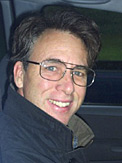
Luis R. Soltero received a B.A. in Chemistry (1981), a M.C.S. in Computer Science (1985) and a Ph.D in Nuclear Magnetic Spectroscopy (1990) from Rice University in Houston, Texas. He received the Z.W. Salsburg Award for excellent achievements and outstanding scholarship and he was also a Danforth Fellow. While at Rice he taught in both the Chemistry and Computer Science departments, as well as supervised graduate students doing special projects in computer science. He later served as a Research Scientist and Network Manager.
Luis is the founder of Global Marine Networks, LLC which develops and delivers wireless data services to users in remote locations via satellite technology. Innovative products such as XGate, OCENS.Mail and WeatherNet have already set new industry standards for providing reliable, fast data services such as compression based email, weather on demand, and vessel tracking for ships world wide.
Luis' maritime products are unique as they have resulted from the first hand knowledge gained from offering services for marine computers since 1992. He has extensive offshore experience and has lived and worked in the marine environment in many countries for over 10 years. He has in depth experience and knowledge in designing and installing and maintaining global communications systems for vessels including electronic navigation, SSB installation, and offshore vessel to internet e-mail and weather acquisition. In collaboration with Starpath School of Navigation he created the StarPilot line of navigation computers for both PC and handheld calculators. The StarPilot line offers the state of the art in celestial and piloting computations for mariners.
David Burch
Director, Starpath School of Navigation
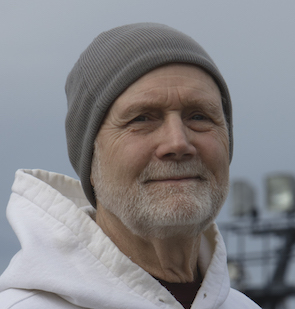
David Burch is the author of the Starpath online courses and director of the school. He has more than 70,000 miles of ocean experience ranging from the Arctic ice edge to Tahiti and Australia in the Pacific and from New York to Panama in the Atlantic. He has sailed across the Pacific to Hawaii ten times, three times winning the Victoria to Maui yacht race, and in 1984 setting the elapsed time record for that passage for vessels under 38 feet long (the record lasted sixteen years, but was superseded in the 2000 race). In powerboats, he delivered a 65-foot fishing vessel from New York to Seattle, via Panama and has made numerous coastal deliveries between WA and CA, AK, and Mexico. He navigated the only American entry (72-foot Cassiopeia) in the storm-ridden '93 Sydney to Hobart yacht race and has since navigated that vessel on the '96 Vic Maui and Swiftsure Lightship Classic when she won first overall in the latter.
He is the author of fifteen books on marine navigation and his magazine articles have appeared in Cruising World, Ocean Navigator, Sailing, and Sea Kayaker. His column "Burch at the Helm" appeared in BlueWater Sailing magazine from 2009 to 2015.
His work has been recognized with the Institute of Navigation's Superior Achievement Award for outstanding performance as a practicing navigator, and by a USCG citation for his successful weather and vessel performance analysis used in a search and rescue operation. In February, 2011 he was awarded Fellow grade in the Institute of Navigation. In May of 2011 he was named a Fellow of the Royal Institute of Navigation in London.
On the academic side, he is a past Fulbright Scholar with a Ph.D. in physics.
In 2006 he devoted his summer to routing the OAR NW rowing team as they won the Great North Atlantic Rowing Race and earned a place in the Guinness Book of World Records for being the first row ever across the North Atlantic (New York City to Falmouth) that actually arrived at their intended destination.
In 2016 he assisted the MAD DOG Racing Team with navigation, weather, and routing preparation, leading to a new (remarkable) record of 3 days and 20 hr in the Race to Alaska (Victoria BC to Ketchikan, AK) in a 33-ft catamaran.
He designed an electronic barometer now used by NWS VOS ships and sailors worldwide, as well as a marine barograph app and data logger for iOS and a low-cost, high-accuracy barometers for computers.
In 2024 and 2025 he taught custom navigation courses for the US Navy, Special Operations Command.